News & Media
News & Media
· Potash producer seeks to tap into Manitoba’s critical mineral drive
BRANDON — A western Manitoba potash producer could generate as much as $450 million in annual sales if it expands operations over the next five years under an ambitious mining plan touted by the provincial government.
The Potash Agri Development Corp. of Manitoba (PADCOM) expansion plays a vital role in the province’s move to increase its critical mineral output, company president Daymon Guillas said this week.
“PADCOM, without a doubt, can double, triple, quadruple our production in the next five years.”
PADCOM, Manitoba’s first and only potash mine, located near Harrowby in the Municipality of Russell-Binscarth, produces about 250,000 tonnes annually, with its product sold in Canada and shipped through the Port of Churchill.
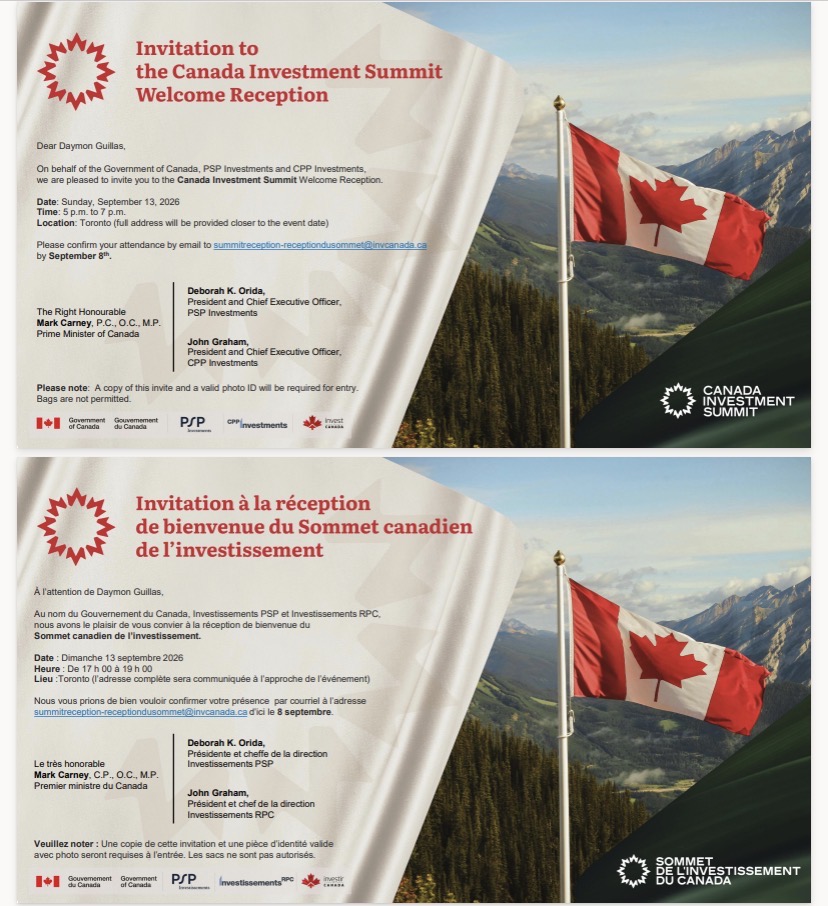
Premier Wab Kinew announced the mining expansion plan on Sept. 15 at the Canada Investment Summit in Toronto.
The plan is intended to help move advanced mining projects toward production while improving the province’s ability to get minerals to international markets.
PADCOM’s plan to triple its current size would require about $400 million in investment and eventually “generate between $350 million and $450 million in annual sales,” Guillas said.
The company could also add between 85 and 110 employees as production increases, with additional jobs expected to be created indirectly through businesses supplying the mining industry, he said.
Guillas said mining activity generates demand for a range of services and materials, including power, equipment, mechanics, electricians, pumps and motors.
For every mining job created locally, another 1.5 jobs could be generated through spinoff activity. That means an expansion involving 100 mining positions could potentially create another 150 local jobs, he said.
The potential growth at PADCOM comes as Manitoba pursues a plan to triple critical mineral production and attract new investment into the province’s mining sector.
Guillas, who attended the recent investment summit in Toronto, said Manitoba has several mining projects that are ready to move forward but are waiting for power infrastructure.
He also pointed to improvements in the province’s mining approval process as another factor that could encourage investment.
“What used to take five years for a permit or three years or longer is now down to 100 days, 90 days,” Guillas said.
“Manitoba’s open for mining, and they’re organized. And that’s what attracts investors.”
For PADCOM, increased production would also open additional markets.
Guillas said the company expects to supply more potash within Canada while increasing shipments through the Port of Churchill to Europe.
The expansion could also allow PADCOM to produce premium products such as sulphate of potash and potassium hydroxide in Manitoba rather than importing them.
— Brandon Sun
· Manitoba Premier Wab Kinew, Minister, Jamie Moses and Manitoba Mining Leaders including PADCOM'S Daymon Guillas at Canada Investment Summit, supporting critical mineral production in Manitoba.
Posted September 24, 2026
Please see video link below
https://www.facebook.com/share/v/1DCi9SkahR/
· PADCOM Attends the Canada Investment Summit in Toronto
· Potash ‘test shipment’ planned for Churchill
Wed 06/17/2026
THE owner of Manitoba’s sole potash mine plans to send its first shipment to Europe via the Port of Churchill this fall.
Upwards of 200 tonnes of potash will travel to the Port of Antwerp Bruges in Belgium, said Daymon Guillas, president of the Potash Agri Development Corporation of Manitoba (PADCOM).
From there, it’ll be taken to a client in France.
“This is a test shipment,” said Guillas, who declined to give the customer’s name.
The Harrowby potash mine has been in a test production phase. Staff extracted around 10,000 tonnes between February and April
this year, Guillas said.
Potash is largely used in fertilizer. Canada — specifically, Saskatchewan — produces the most potash in the world. In 2024, it accounted for nearly one-third of production.
European countries buy potash from Russia, the world’s second largest producer. The EU placed import quotas following Russia’s invasion of Ukraine and has attempted to reduce reliance on Russian
fertilizer.
Guillas said PADCOM is seeing great demand for its goods within North America and Europe. Potential customers have requested upwards of one million tonnes of potash from PADCOM, he said.
The company began mining this year after 19 years of behind-the scenes efforts. PADCOM has government approval to extract 250,000 tonnes of potash annually.
The site is across the border from Saskatchewan potash mines. Saskatchewan accounted for 25 million tonnes of production in 2024.
Guillas aims to add another 20,000 tonnes of production to the Harrowby mine this summer by creating new wells.
Most of the recently extracted potash will be sold to farmers in the Prairies, Guillas said. It’ll be transported by truck.
In the French customer’s case, two to four shipping containers will travel along the Hudson Bay Railway before landing at the Port of Churchill on the edge of Hudson Bay. An exact date hasn’t been finalized.
“The cost to go to the East Coast or the West Coast to a port is astronomical. It’s not within PADCOM’s affordability,” Guillas said. “Churchill is PADCOM’s only ability to vessel potash to Europe and
South America.
“We’ll always support Churchill … As they grow, we’ll grow with
them.”
PADCOM is in talks with Arctic Gateway Group, which owns the Port of Churchill, about building a roughly 50,000 tonne storage facility at the northern Manitoba port. Costs are being worked out, Guillas said.
The barge taking PADCOM’s potash to Europe will likely also be filled with other goods. Those shipments haven’t been finalized, though zinc concentrate will move through the port again, said Chris Avery,
Arctic Gateway Group president.
He was unsure whether the two commodities would be on the same ship. Hudbay Minerals has been shipping zinc concentrate through
the port since 2024.
A northern supply vessel is slated to transport goods from Churchill to the Kivalliq region of Nunavut later this month or early July. Vehicles and building supplies will be on board, Avery said.
Meantime, Arctic Gateway Group continues to talk with Ottawa’s Major Projects Office about making a Port of Churchill expansion a nation-building project.
“The more progress that we make on things like … potash, agricultural products, (it) just helps the case,” Avery said. “It’s all part of the momentum that we’re building.”
Construction of the port’s wharf face is ongoing. Shipments will be planned around the work, Avery said.
A round-trip for rail containers from Harrowby to Churchill shouldn’t exceed a week, Guillas said. It takes 10 sailing days, on average, to reach the Port of Antwerp from Churchill.
That’s a drop from the average 13 or 14 days via the Port of Thunder Bay on Lake Superior, an Arctic Gateway Group spokesperson said.
Guillas is working on profit-sharing agreements with
Waywayseecappo, Birdtail Sioux and Gambler First Nations. The Manitoba Métis Federation signed a royalty agreement with PADCOM in 2025. Details haven’t been publicly disclosed.
“It’s a very, very important mineral for the future,” David Chartrand, MMF president, said of potash.
He pointed to the world’s growing population — it surpassed eight billion in 2022. Feeding everyone will require soil maintenance, he said.
“It is becoming seriously worrisome for some countries,” Chartrand said. “We’ve got to look at how we start changing the way we focus our future economic growth.
“I think we’ve got to take advantage of what’s here and realize we’re sitting on a massive gold mine of natural resources.”
PADCOM employs 19 staff, including local First Nations and Métis residents, Guillas said, adding the mine’s life exceeds 100 years and holds 74 million tonnes of potash reserves.
Copyright (c)2026 winnipeg, Edition Winnipeg
GABRIELLE PICHÉ
· Manitoba's Only Potash Mine Nears Commercial Production After Nearly 20 Years of Planning
May 8, 2026
The only potash mine in Manitoba plans to begin commercial production next month after nearly two decades of development.
The $30-million facility near Harrowby, a tiny hamlet in the western Manitoba municipality of Russell-Binscarth, will begin producing and stockpiling the agricultural fertilizer in June, said Daymon Guillas, president of the Potash and Agri Development Corporation of Manitoba.
The company is commonly referred to as PADCOM.
The commercial production caps off a 19-year effort by the privately owned company — commonly referred to as PADCOM — to plan, finance and build a potash mine in the face of considerable skepticism within the mineral-extraction industry.
"We're the no-name brand. We're not miners. Lots of people laughed at us and said it couldn't be done," Guillas said Thursday in an interview from Asessippi, Man.
"There's a project in Saskatchewan that is name brand. They spent $300 million, and they haven't produced anything yet. We spent $30 million, and we're producing."
The Harrowby facility, first envisioned in 2007, extracts potash from below the surface without excavating the massive caverns associated with the largest of Saskatchewan's potash mines.
Instead, the Manitoba facility uses a process called solution mining. Brine heated to 40 C is poured into wells, where the warm, salty water dissolves the potash in the surrounding rock.
The Potash and Agri Development Corporation of Manitoba plans to produce 30,000 to 35,000 tonnes of potash during its first fiscal year of commercial production. (Catherine Moreau/Radio-Canada)
The potash-saturated solution is pumped to the surface and then cooled in outdoor ponds, allowing potash to crystallize back into a solid substance.
Guillas said the company initially installed a mechanical cooling process that did not produce enough potash for the company to become profitable. With the help of Saskatchewan potash-industry expertise, the company switched to outdoor cooling ponds, which it tested out earlier this year.
Guillas said the new cooling system, which required the company to obtain a new environmental licence, was the final technological obstacle the company had to overcome.
The company also faced a fiscal crunch this past winter, when a $77-million financing deal with a Dubai-based investment firm fell apart, requiring the company to seek more cash from its silent Canadian investors, he said.
"Our potash is Canadian-owned, not foreign-owned. Nobody can tell us what to do with our potash," Guillas said.
The company has one administrative hurdle left to clear. It must complete a mine-closure plan, which Guillas described as an operating manual for all aspects of the mine.
The Harrowby facility is permitted by the province to produce 250,000 tonnes of potash a year. Guillas said he expects the mine to produce somewhere around 30,000 to 35,000 tonnes during its first fiscal year, which concludes at the end of April 2027.
"We get profitable at 15,000," he said.
The mine should be able to scale to 250,000 tonnes by 2028-29 and then expand over a series of years to one million tonnes per year, if the financing is available, Guillas said.
To place that in context, Saskatchewan — the world's largest potash producer — produces 25 million tonnes of the mineral per year.
Most of the company's potash is destined for the export market. The company hopes to reach Europe and South America by using the Hudson Bay Railway and the Port of Churchill.
"We can go to Churchill and back in six days, so it's a short train ride," Guillas said. "So, the Port of Churchill lets us get product to a port and to a vessel in a very affordable way."
Arctic Gateway Group, which runs the northern Manitoba railway and port, said it has the capacity to carry the volume of potash the company initially expects to produce and load it onto ships at Churchill.
"AGG recently added 30,000 tonnes of new bulk storage capacity at the port, which could be used for potash storage," company president Chris Avery said in a statement.
Avery said the port will need more handling facilities to handle larger volumes of potash from PADCOM and the much larger potash mines in Saskatchewan. Arctic Gateway will also need to upgrade the railway to handle heavier loads.
"We believe there is a strong long-term case for Churchill to play an expanded role in getting western Canadian potash to international markets," Avery said.
Guillas said the company is also looking at other rail routes but has not completed the logistics for export shipments if Churchill is not ready.
"We have markets. We have lots of markets, but we don't have a path yet for that," Guillas said.
In the meantime, the company is simply looking forward to commercial production. So is the provincial government, which stands to collect somewhere in the vicinity of $8 million a year in royalties once the mine produces 250,000 tonnes a year.
"We look forward to PADCOM becoming commercially operational and to begin delivering economic benefits for all Manitobans this year," Manitoba Business and Mining Minister Jamie Moses said in a statement.
All it took was 19 years to get here, Guillas said.
"You don't need to be a brand-name mining company to do it. You just have to have the guts and the patience to do it."
ABOUT THE AUTHOR
Senior reporter, CBC Manitoba
Bartley Kives joined CBC Manitoba in 2016. Prior to that, he spent three years at the Winnipeg Sun and then 18 at the Winnipeg Free Press, writing about politics, music, food and outdoor recreation. He's the author of three books - two of them Canadian bestsellers - and the winner of a Canadian Screen Award for reporting.
https://www.cbc.ca/news/canada/manitoba/potash-mine-padcom-production-9.7191725